• Skip to primary navigation
  • Skip to main content
  • Skip to primary sidebar
  • Skip to footer

Brain Ninjas

Let us help you teach like a ninja!

  • Engaging Lessons
  • Teaching Strategies
  • Classroom Tips
  • Testimonials
  • Shop
    • TpT ($USD)
    • BN Shop ($CAD)
  • Free Resources
  • Your Province
    • Alberta
    • British Columbia
    • Saskatchewan
  • About Us
  • Contact Us
    • Privacy Policy

professional development

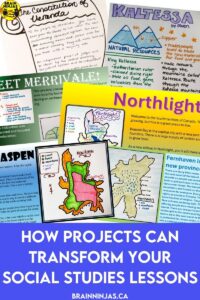
How Projects Can Transform Your Social Studies Lessons

by Brain Ninjas Leave a Comment

Using projects in your social studies classroom is a great way to boost engagement. Check out cumulative project-based learning and how it can work for you.

If you’re like most teachers we chat with, you’ve probably noticed something: students retain information better when they actually create something with it.

The new Alberta social studies curriculum is…dry. It’s mostly just facts that are expected to memeorized, But this gives us an incredible opportunity. The curriculum is built on big ideas (geography, economy, government, culture) that are meant to connect to how students see the real world. But traditional worksheets and fill-in-the-blank activities? They flatten all that richness into busywork.

Project-based learning in social studies doesn’t just look better on Instagram (though your students’ work will look amazing). It genuinely changes how students understand concepts. When a student has to design an entire civilization (deciding where it settles based on geography, how it feeds its people, what systems govern it) they’re not just learning about civilizations. They’re thinking like a historian, geographer, and economist all at once.

[Read more…] about How Projects Can Transform Your Social Studies Lessons
Filed Under: Engaging Lessons, Teaching Strategies Tagged With: professional development, Professional Learning, Project Based Learning, Social Studies, social studies lessons

The Sweetest Way to Teach Self-Assessment

by Brain Ninjas


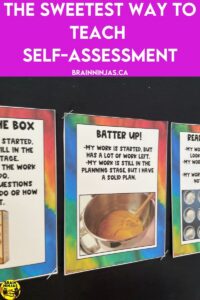
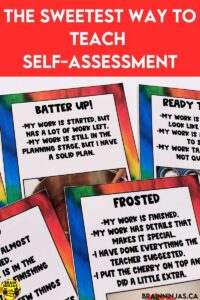
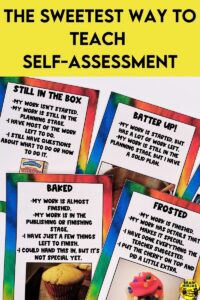
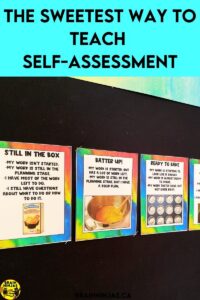
A set of colourful posters featuring cupcakes can help with self-assessment. Teach students to self-assess with this rubric that helps take the burden of feedback off your teacher shoulders and helps students truly understand the quality of their work.

Here’s the truth: students don’t always know what “good work” looks like.

They turn in an assignment, you hand it back with feedback, and you can see the confusion in their eyes. “But I thought it was done?” they say. Or worse, they’re genuinely proud of work that’s only halfway there, completely unaware that there’s so much more they could do to make it shine.

Sound familiar?

One of the biggest challenges in elementary classrooms (especially in grades 3-6) is helping students develop the ability to self-assess. Not the surface-level kind where they just check a box. I mean real, honest evaluation of their own work. The kind that builds confidence, independence, and a genuine understanding of what quality looks like.

If this is something you struggle with in your classroom, you’re not alone. And we’ve got a solution that’s surprisingly simple (and just a little bit delicious).

The Problem With Traditional Assessment

A set of cupcake posters hangs on a bulletin board in a classroom. Teach students to self-assess with this rubric that helps take the burden of feedback off your teacher shoulders and helps students truly understand the quality of their work.

Here’s what usually happens with rubrics in elementary classrooms:

You create a rubric. It has columns and numbers and descriptors. Some students actually read it. Most don’t. Your struggling learners look at it like it’s written in another language. And even your advanced students sometimes miss the point. Those kids focus on getting the “right” score instead of understanding why a piece of work is strong.

The fundamental issue? Most rubrics are abstract. They use words like “proficient,” “partially meets standards,” and “demonstrates understanding.” Those are teacher words, not kid words. When students don’t deeply understand the descriptors on a rubric, they can’t use it to guide their own work or honestly assess where they’re at.

That’s where formative assessment gets tricky. You want students checking their own work and identifying what comes next, but the tools we give them often fall short of helping them actually see the difference between levels.

Enter: The Cupcake Scale

What if there was a way to make work quality instantly visual and intuitive? What if your students could look at a simple poster and immediately understand exactly where their assignment falls on a quality spectrum. And then what they need to do to move it forward?

That’s where the cupcake self-assessment rubric comes in.

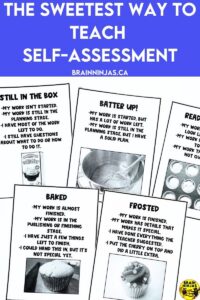
Instead of abstract terminology, imagine this: Your students know what a cupcake looks like at every stage: still in the box, batter up, ready to bake, baked, and frosted. Each stage of baking mirrors a stage of work completion. And suddenly, self-assessment makes sense.

When a student says, “My work is ready to be handed in,” they’re not speaking in vague educational jargon. They’re comparing their project to something concrete, visual, and honestly. And it’s something that makes them smile (and sometimes a little hungry).

Why This Works (And Why Your Brain Knows It)

A set of black and white cupcake posters hang on a wall. Teach students to self-assess with this rubric that helps take the burden of feedback off your teacher shoulders and helps students truly understand the quality of their work.

The cupcake scale works because of something called cognitive scaffolding. Your brain processes concrete, visual information faster and more reliably than abstract concepts. Metaphors (especially ones based on real-world experiences like baking) create neural bridges that help ideas stick.

Think about it: Every student in your classroom has seen a box of cupcakes. Most have helped bake or frost a cupcake at some point. They know the difference between ingredients sitting in a bowl and a finished, decorated cupcake. That prior knowledge becomes the foundation for understanding work quality.

When students use the cupcake scale as a student-centered assessment tool, they’re not just checking off a rubric. They’re:

  • Visualizing quality levels in a way their brains naturally understand
  • Building independence by making their own judgments about their work
  • Developing ownership of the learning process
  • Creating a shared language with their teacher and classmates about what “done” means

The Real Magic: Self-Assessment Happens Naturally

Here’s what teachers tell us after they introduce the cupcake rubric posters to their classrooms:

“Students started asking themselves, ‘Am I baked, or am I frosted?’ without being prompted.”

A set of colourful cupcake posters hang on a classroom wall to show students the progression of quality work. Teach students to self-assess with this rubric that helps take the burden of feedback off your teacher shoulders and helps students truly understand the quality of their work.

“My struggling writers suddenly understood what I meant by revising. They could SEE the difference.”

“Students who usually hand things in half-finished started actually completing their work because the visual made it clear what they were missing.”

This is what effective student self-assessment looks like. It’s not forced. It’s not complicated. Students internalize the scale and start using it as they work, not just when you ask them to reflect.

I hung these up, did a quick lesson about how to use them and now kids tell me their work is frosted. My favourite was the kids saying he was half-baked. Thanks so much for these!

Patty J

What Makes This Different From Other Rubrics

Sure, there are lots of assessment tools out there. But the cupcake scale has some specific advantages:

A set of colourful posters featuring cupcakes finished in different levels of quality makes a good analogy for students to understand quality work. Teach students to self-assess with this rubric that helps take the burden of feedback off your teacher shoulders and helps students truly understand the quality of their work.

It’s visual. You can print it as a big poster for the classroom and mini-reference cards for each student.

It’s memorable. Baking stages are part of kids’ experiences. They won’t forget what “batter up” means.

It works across grade levels and subjects. Whether you’re assessing a writing assignment, a math project, a social studies poster, or a science presentation. It works for any project or assignment. The scale translates.

It builds confidence. Students feel smart when they can accurately assess their own work. Confidence leads to better effort and better outcomes.

It reduces teacher burden. When students can self-assess reliably, you spend less time on low-level feedback and more time on meaningful coaching.

Bringing It Into Your Classroom

The beauty of this approach is that it’s not complicated to implement. You don’t need special training or complicated anchor papers. You need posters that students can understand at a glance and language that becomes part of your classroom culture.

Imagine asking a student, “Where are you on the cupcake scale with this assignment?” and getting a thoughtful, honest answer. Imagine your second graders and your sixth graders all speaking the same language about work quality.

That’s the power of a good formative assessment tool. And it happens to taste a little bit like frosting.

Ready to Try It?

If you’re tired of rubrics that confuse more than they clarify, and you want your students to develop real self-assessment skills, we’ve created ready-to-print posters that make this whole approach foolproof.

Grab your free Cupcake Self-Assessment Rubric and start using it this week. Get the full-size classroom posters plus student-size reference cards. It comes with everything you need.

Click here to get a free set of cupcake assessment posters when you sign up for our email list.

We’d love to see the posters hanging in your classroom. Send us a picture or tag us on Instagram @brainninjastpt

For more feedback and assessment ideas, read our post How to Give Student Feedback That’s Amazing.

love the ninjas

Filed Under: Classroom Tips Tagged With: assessment, feedback, Posters, professional development, Professional Learning, self-assessment, student assessment, student feedback

30 Free Ways to Reward Students

by Brain Ninjas

If you are looking for some free classroom rewards that you can use for extrinsic motiviation, this is the list for you. Come check out these classroom rewards that you can use without it costing any money.

While not all students are motivated by rewards, many are. But, either way, rewarding students shouldn’t cost you a fortune. In fact, we’ve found that students will often perform better and feel more rewarded with simple and free rewards. Are you looking for ways to reward your students without breaking the bank? Here are 30 free ideas to motivate and reward your students.

[Read more…] about 30 Free Ways to Reward Students

Filed Under: Classroom Tips Tagged With: Classroom Community, Classroom Management, Classroom Rewards, First Year Teachers, professional development, Professional Learning, Student Motivation, Student Teachers, Teachers on a Budget

Are You Still Wasting Time With Brain Breaks?

by Brain Ninjas

Are brain breaks taking up too much time in your lessons and interrupting learning? You're probably using them incorrectly. Come read this post to help put the best practices for brain breaks into your classroom.

Do you find that brain breaks are disrupting your learning and working time? Do students seem more stimulated after a brain break? Is it difficult to get them calmed back down? Maybe you’ve been using brain breaks wrong? Stop wasting your learning time with brain breaks by managing them differently.

[Read more…] about Are You Still Wasting Time With Brain Breaks?

Filed Under: Classroom Tips Tagged With: Back to School, brain breaks, Classroom Management, Differentiated Instruction, Differentiation, Inclusive Classroom, professional development, Professional Learning

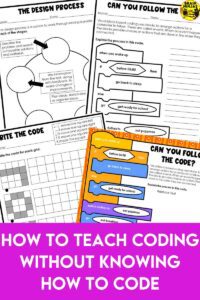
How to Teach Coding Without Knowing How to Code

by Brain Ninjas

If you don't know how to code, but you are expected to teach coding, we've put together activities you can use without any experience.

It seems that teachers are expected to have a wealth of knowledge about everything under the sun. Even as the world changes, they keep adding the new learning to the old content so that students will benefit.

Coding is a vital skill and there are so many ways it enriches the classroom. However, many teachers feel completely inadequate to teach coding because they have never been taught to code.

That’s ok. Coding isn’t about knowing how to code. It’s about knowing how to problem solve and we already know that’s where teachers excel. Come learn some of the ways you can teach coding without being able to code.

[Read more…] about How to Teach Coding Without Knowing How to Code

Filed Under: Classroom Tips Tagged With: Coding, Computer Science, professional development, Professional Learning, science, Science Lessons, Teachers Pay Teachers, Unplugged Coding, Visual Block-Based Coding

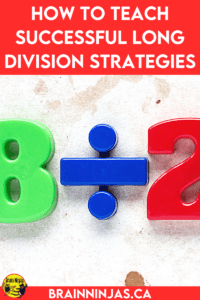
How to Teach Successful Long Division Strategies

by Brain Ninjas

Do your upper elementary students struggle with long division? We've collected all our best tools for helping students master long division and you can have them all. Come read this post and see how we can help your students feel better about math.

Long division has long been one of the most challenging concepts for students in Grade 4 and Grade 5 to master. There are a few reasons students struggle with long division, so we’ve tried to break down some of the ways we set our students up for success.

[Read more…] about How to Teach Successful Long Division Strategies

Filed Under: Engaging Lessons, Teaching Strategies Tagged With: Differentiation, digital task cards, interactive math notebooks, Interactive Notebooks, long division, Math, math videos, Math Worksheets, Mathematics, Multiplication, professional development, Professional Learning, self-checking task cards, task cards, Teachers Pay Teachers, videos, YouTube

Next Page »

Primary Sidebar

Brain Ninjas on Facebook
Brain Ninjas on Instagram
Brain Ninjas on Pinterest
Brain Ninjas Shop (CAD)
Brain Ninjas on Teachers Pay Teachers

Most Recent

  • Using projects in your social studies classroom is a great way to boost engagement. Check out cumulative project-based learning and how it can work for you.
    How Projects Can Transform Your Social Studies Lessons
    If you're like most teachers we...
  • Teach students to self-assess with this rubric that helps take the burden of feedback off your teacher shoulders and helps students truly understand the quality of their work.
    The Sweetest Way to Teach Self-Assessment
    Here's the truth: students don't always...
  • If you are looking for ideas to organize a Remembrance Day assembly in your school, check out this post full of ideas.
    Easy to Use Remembrance Day Assembly Ideas
    Every school across Canada has held...

Before Footer

Looking for something?

Footer

Brain Ninjas on Facebook
Brain Ninjas on Instagram
Brain Ninjas on Pinterest
Brain Ninjas Shop (CAD)
Brain Ninjas on Teachers Pay Teachers

Copyright © 2026 · Wellness Pro on Genesis Framework · WordPress · Log in

This website uses cookies to improve your experience. We'll assume you're ok with this, but you can opt-out if you wish.AcceptReject Read More
Privacy & Cookies Policy

Privacy Overview

This website uses cookies to improve your experience while you navigate through the website. Out of these, the cookies that are categorized as necessary are stored on your browser as they are essential for the working of basic functionalities of the website. We also use third-party cookies that help us analyze and understand how you use this website. These cookies will be stored in your browser only with your consent. You also have the option to opt-out of these cookies. But opting out of some of these cookies may affect your browsing experience.
Necessary
Always Enabled
Necessary cookies are absolutely essential for the website to function properly. This category only includes cookies that ensures basic functionalities and security features of the website. These cookies do not store any personal information.
Non-necessary
Any cookies that may not be particularly necessary for the website to function and is used specifically to collect user personal data via analytics, ads, other embedded contents are termed as non-necessary cookies. It is mandatory to procure user consent prior to running these cookies on your website.
SAVE & ACCEPT