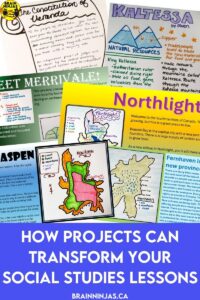
If you’re like most teachers we chat with, you’ve probably noticed something: students retain information better when they actually create something with it.
The new Alberta social studies curriculum is…dry. It’s mostly just facts that are expected to memeorized, But this gives us an incredible opportunity. The curriculum is built on big ideas (geography, economy, government, culture) that are meant to connect to how students see the real world. But traditional worksheets and fill-in-the-blank activities? They flatten all that richness into busywork.
Project-based learning in social studies doesn’t just look better on Instagram (though your students’ work will look amazing). It genuinely changes how students understand concepts. When a student has to design an entire civilization (deciding where it settles based on geography, how it feeds its people, what systems govern it) they’re not just learning about civilizations. They’re thinking like a historian, geographer, and economist all at once.
Why Project-Based Learning Works (And Saves You Time)
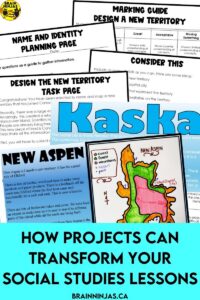
Here’s what we’ve learned after years in the classroom: good project-based learning actually takes less prep time than creating twenty different worksheets.
When you use a cumulative project structure, students work toward one big goal across several weeks. Instead of planning five separate activities, you’re planning one, but with multiple layers. This means:
- Fewer transitions between activities
- Deeper thinking because students aren’t jumping topics constantly
- Built-in differentiation because the project naturally allows different entry points
- Less grading because you’re assessing one project, not dozens of worksheets
The big investment? The upfront planning. But once you have a solid project framework, it becomes reusable. You’re not recreating the wheel every unit. There’s already enough to teach that you don’t need to add to it.
What Makes a Project Actually Work in Your Classroom
Not all projects are created equal. I’ve seen projects that look fun but don’t actually teach anything. Here’s what separates the ones that work:
1. Clear Scaffolding
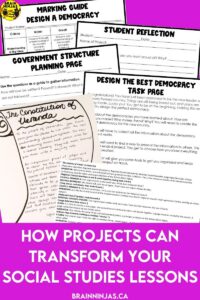
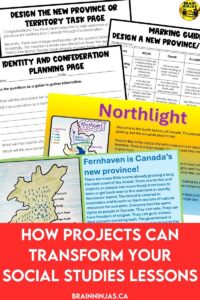
Students need guided planning pages that help them gather information systematically. They shouldn’t be staring at a blank page wondering what to research. Give them specific questions: What geographical features supported settlement? How did people farm? Who held power and why?
2. Multiple Representation Options
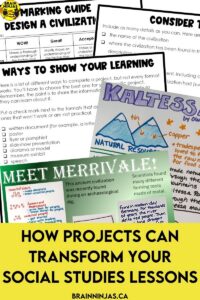
Some students will create a visual poster. Others will write a detailed description. Some will build a diorama. A really strong project gives students choice in how they show their learning while keeping the what consistent.
3. Authentic Audience
This is crucial. Projects presented only to the teacher feel like busywork. When students know their work will be shared (presented to classmates, displayed in the hallway, submitted to a digital gallery) the quality jumps significantly.Honestly, it adds a layer of accountibility, too.
4. Clear Success Criteria
Students need to know exactly what “Great!” looks like. Not a mysterious rubric they don’t understand, but concrete examples: “A WOW project explains how geography affected settlement with specific details and logical connections.” We always include checklists for the requirements and rubrics in student-friendly language for the criteria.
Making It Work Across the Grades
The beauty of project-based learning is it scales beautifully.
Younger students might design a community and explain one system (how they get water, how leaders make decisions, how people trade).
Older students can manage more complexity: multiple interconnected systems, cause-and-effect relationships, and deeper historical thinking.
The framework stays the same. The depth increases. This make differentiation easier, too.
The Planning Pages That Save Your Sanity
This is where we want to be really honest: planning pages are the difference between projects that work and projects that become chaotic. They keep students focussed and accountable.
Good planning pages:
- Guide students through research systematically
- Prevent the “but what do I research?” paralysis
- Create built-in accountability checkpoints
- Give you something to assess as they work, not just at the end
When you have these, students stay on track. You know who’s struggling before presentation day. And when something’s not working, you catch it early.
If a student stuggles to finish their project, the planning process can still be checked to see what students understand. In fact, you can just stop at the end of the planning if you are assessing their learning, but only if you’re asking the right questions.
Where to Start This Week
If you want to dip your toes into project-based learning without overhauling everything, here’s what we do:
Pick one unit. Not three. One. Pick the one you teach every year that feels a bit flat.
Plan the big project first. What do you want students to create? A civilization? A government system? A community solving a real problem? Start with the end goal. Look at the big ideas, organizing questions or enduring outcomes for your curriculum. These are great places to start.
Then work backwards. What do they need to know to create that? What planning pages will scaffold their research? What choices can they have? This will help guide you in what you teach and the order you teach it.
Build in checkpoints. Week 1: research and planning pages. Week 2-3: creating. Week 4: presentation.
This structure takes the same amount of time as your usual unit but produces genuinely different results.
Get Started with A Free Project
Don’t want to build this from scratch? We’ve put together two different cumulative projects that are ready to use in your social studies class.
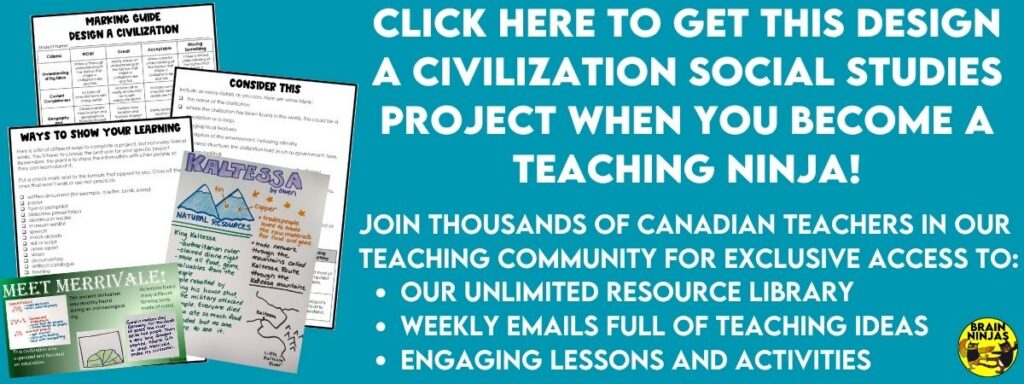
- Design a Civilization (Perfect for Grade 5 Alberta social studies, but works for any year that focuses on ancient civilizations in Grade 4-6)
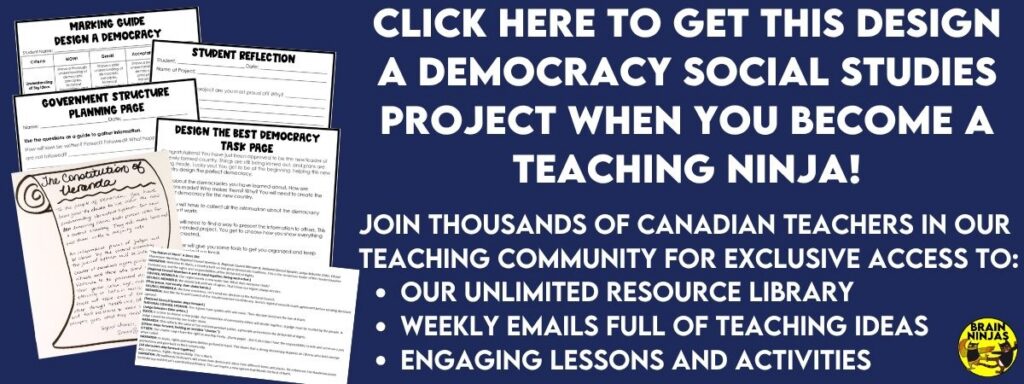
- Design a Democracy (Perfect for Grade 6 Alberta Social Studies, but works for any year that focuses on democracy and government structures in Canada for Grade 5-7.)
Both come with all the planning pages, scaffolding guides, marking rubrics, and presentation options. We’ve even included sample projects.
Taking It Further
Once you see how much students engage with real project work, you’ll probably want more frameworks and resources. We’ve created complete, ready-to-teach lessons for the entire year for the Alberta Social Studies curriculum:
Grade 3 Alberta Social Studies Full Year of Lessons in our TpT Store ($USD) or our BN Shop ($CAN).
Grade 4 Alberta Social Studies Full Year Lessons in our TpT Store ($USD) or our BN Shop ($CAN).
Grade 5 Alberta Social Studies Full Year Lessons in our TpT Store ($USD) or our BN Shop ($CAN).
Grade 6 Alberta Social Studies Full Year Lessons in our TpT Store ($USD) or our BN Shop ($CAN).
The Real Payoff
Here’s what happens when you shift to project-based learning: You get fewer behaviour management issues during social studies because students are genuinely interested. You get better assessment data because you’re seeing deep thinking, not surface-level recall. And you get to do what you went into teaching to do: actually teach, not just mark endless worksheets.
Your students will remember that project years from now. That’s the difference project-based learning makes.
Read More: How to Keep Students Accountable During Project Based Learning



