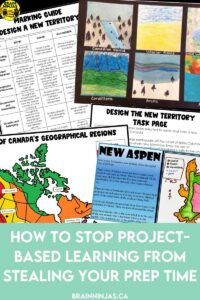
You know the feeling: It’s 4 p.m., you’ve got 47 browser tabs open, three Pinterest boards bookmarked, and you’re still trying to find that one project idea that will actually work for your mixed-ability classroom. Your students are ready for something engaging and hands-on. You want to do project-based learning. But between sourcing materials, designing rubrics, figuring out how to differentiate, and worrying whether the project actually teaches what you need it to teach—the setup feels like a second job.
Sound familiar?
Here’s the truth: Project-based learning doesn’t have to come with a 2-hour planning session. And student choice doesn’t have to mean chaos. When the projects are already structured and ready to go, you get the best of both worlds: engagement that actually sticks, and your prep time back.
The Real Cost of Building Projects from Scratch
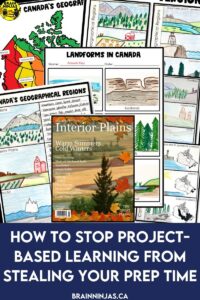
Let’s be honest about what building a PBL unit actually takes:
- Finding grade-appropriate content that matches your curriculum
- Designing the project parameters so students know what “done” looks like
- Creating assessment tools that measure what you’re actually teaching
- Planning multiple formats so students can show their learning in different ways
- Building in choice without letting it spiral into decision paralysis
Even when you’re experienced, that’s easily 45 minutes to an hour of planning work. When you’re new to project-based learning or trying a topic for the first time? Double that.
And here’s where it gets tricky: the more time you spend planning, the more rigid your project often becomes. You’ve invested so much in the design that there’s less room for the student choice that actually drives engagement.
The Shortcut: Start with Projects That Are Already Built
What if the projects were already there (structured, scaffolded, and aligned to outcomes or teaching standards) but still open-ended enough that students could make real choices?
That’s the sweet spot of project-based learning: students choose the format and content direction, while you focus on teaching.
When the project planning is done for you, something shifts:
- You get 30–45 minutes back in your prep time (or more, depending on how many topics you’re covering)
- Students stay engaged because they have meaningful choice in how they present their learning
- Assessment is clear because rubrics and reflection pages are already written
- Differentiation is built in because open-ended formats naturally meet students where they are
You’re not spending your evening Googling “cool project ideas for Grade 5 Canada.” You’re teaching. And we like to help you plan so you can get to the teaching part.
Why Student Choice in Format Matters (More Than You Think)
There’s a reason project-based learning is so effective: when students choose how to show what they know, they own the work. Not the “I-have-to-do-this” ownership. The real kind where they care about the quality because they picked the format.
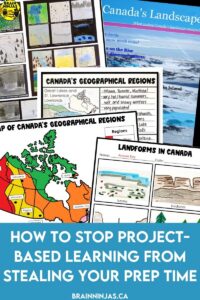
One student makes a poster with detailed illustrations and color-coded regions. Another writes a documentary script. A third designs a board game where players learn resources through gameplay. They’re all hitting the same learning outcomes, but they’re working in their strength zone.
And here’s the thing: you’re not grading 25 different project types. You’re grading the same learning outcomes across different formats. The rubric is consistent. The assessment is manageable.This is the part where many teachers get stuck. Focus on what the student can tell you about the outcome and you’re golden.
What Organized Projects Actually Look Like
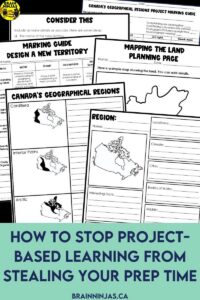
A well-designed project resource includes:
- Clear task description so students know what they’re designing or researching. It should be focused on the actual outcomes or guiding questions (instead of the “product”)
- Planning pages that scaffold thinking (guiding questions help flesh out ideas without doing the thinking for them)
- A menu of ways to show learning so students pick the format that fits their idea
- Assessment tools ready to go (rubrics that match the learning outcomes, not generic “effort” scales) This can also include checklists for requirements to make sure students have included everything needed to be ready for marking.
- Reflection pages for self, peer, and teacher feedback if you want them. These can be used anytime during the project so students can get feedback and change direction with their projects while there is still time to make changes. Don’t leave all the feedback to the end of the project. Learn more about that here.
Students still do the real thinking and creating. You’re not handing them a fill-in-the-blank worksheet. But the scaffolding means you’re not starting from zero on Wednesday night, either.
The Time You Actually Save (And What to Do With It)
When you use a structured project resource, you’re not cutting corners. You’re eliminating the busywork of project design so you can focus on project facilitation.
That extra 30–45 minutes? You could:
- Actually plan formative check-ins instead of just hoping students are on track
- Prep materials or resources students will use during the project
- Build in one-on-one conferencing time to help students develop deeper ideas
- Create extension tasks for early finishers
- Mark something else that’s actually on your pile of endless marking
- Finish something you’ve been avoiding because we all have those items on our desk
Project-based learning was never supposed to add 10 hours to your week. When the heavy lifting of design is done, it becomes what it should be: a teaching tool, not a planning burden.
How This Works in Practice (And How You Can Start)
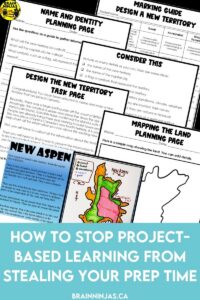
Let’s say you’re teaching about Canadian regions or provinces. A resource with pre-built projects gives you:
- Research or design prompts that align with your curriculum
- Planning templates for the research phase
- A list of presentation formats (poster, slideshow, diorama, video, speech, board game—whatever resonates with your students)
- A marking guide so you know exactly what “great” looks like
- Reflection pages if you want to dig into metacognition
As one teacher put it: “This resource has everything you need and more.” You introduce the project, walk through what the planning pages are for, show students the format options, and then (here’s the magic part) you step back and facilitate instead of managing all the projects.
You’re watching for misconceptions, asking clarifying questions, and pushing students to go deeper. You’re not frantically building rubrics at midnight.
The worksheets and planning pages are designed to be clear enough that students can work through them independently, which means you’re not re-explaining instructions all day. One teacher shared: “The project was easy to understand and complete independently”. That’s exactly what frees up your mental energy to focus on the teaching part.
For Teachers Already Doing PBL
If you’re already teaching with projects and it’s working, you know the value. You also know it takes time. This isn’t about abandoning your approach. It’s about reclaiming it from the planning phase.
Want to dig deeper into why project-based learning works and how to keep students accountable? We’ve got posts on the reasons for project-based learning and how to keep students accountable during project-based learning. Those posts get into the pedagogy and management side.
This post is about the practical shortcut: You don’t have to build it all yourself.
Ready to Reclaim Your Prep Time?
If you teach Grades 4–6 and are looking for project-based units that are ready to go, we’ve built resources for Canadian regions and other topics that take the design work off your plate.
Teachers who’ve used this approach consistently say the same thing: “Students found this engaging and easy to complete” and “The final projects all turned out great!” That’s the sweet spot—when engagement and ease actually go together instead of being in competition.
Want to try before you buy? Grab our free Design a Territory Project and see how structured-but-open-ended projects actually look in practice. It’s a single project template you can use immediately. You might also want all the other free stuff we send to our ninjas. 😉 It works very well if you’ve been learning about regions.
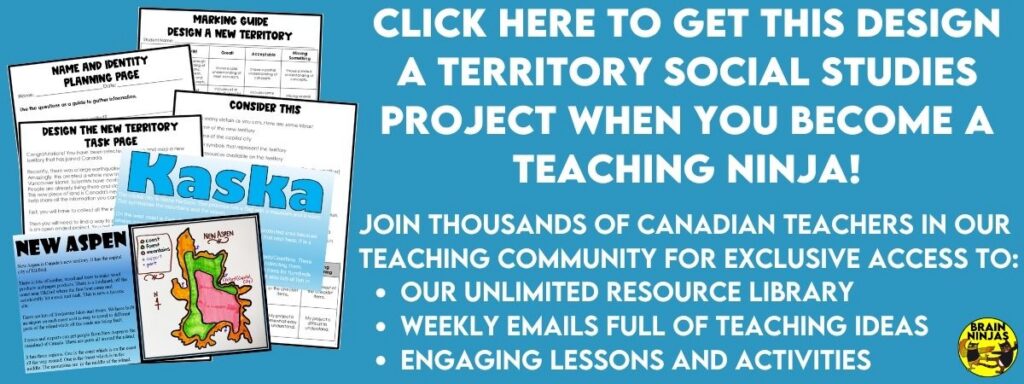
Ready for a full lesson? Check out the Canada Regions Research Projects on TpT ($USD) or our BN Shop ($CAN). It covers all provinces and territories with everything you need: planning pages, assessment tools, reflection pages, and full flexibility in how students show their learning. And it even includes lessons on landforms, maps and the regions themselves (so you can give your students the basics before setting them free to demonstrate their learning.
Because project-based learning should make your teaching better, not your evenings longer.
What’s your biggest time drain with PBL? Let us know in the comments. Are you building projects from scratch, or have you found shortcuts that work? Tell us about it!



Leave a Reply