Every year, Francophone communities across Canada celebrate their traditions and culture. People from around the world celebrate these events, too. There’s no better way to teach French as a Second Language than to connect to French Canadian celebrations and cultural events.
A large part of teaching French as a Second Language (FSL) is connecting students to the culture. Maybe even the most important part! This is an opportunity to learn about the culture of just over 20% of Canadians. That’s one in five Canadians who identify as French Canadians!
Top 6 French Canadian Celebrations to Teach in FSL Class
There are many French Canadian celebrations, but we’ve identified the six most popular.
Carnaval de Québec
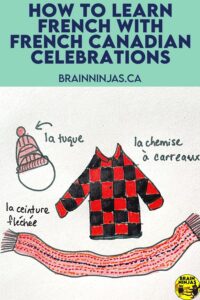
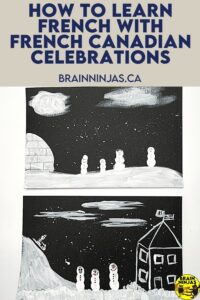
Known around the world as a great winter festival, the Carnaval de Québec draws people to Québec City from late January to early February. Outdoor winter events, competitions, concerts and more bring people out in the winter cold. Don’t forget the Bonhomme Carnaval! This mascot is recognized across the country, even by those who have never been to Carnaval. Try Le Carnaval de Québec Lessons and Activities found in our BN Shop ($CAD) or TpT Store ($USD).
Festival du Voyageur
Voyageurs were men who worked for fur trading companies in 17th century Canada. Most were French and traded with First Nations. They played an important role in the fur trade. Every year in February, the voyageur is celebrated in Manitoba on the lands of the Anishinaabe, Ininew and Dakota peoples and on the homeland of the Métis Nation. Many competitions like jigging and cooking are held at the Festival du Voyageur. Outdoor events and sports are enjoyed by people from far and wide. If you’re interested in learning more, try Le Festival du Voyageur Lessons and Activities found in our BN Shop ($CAD) or TpT Store ($USD).
Cabane à sucre
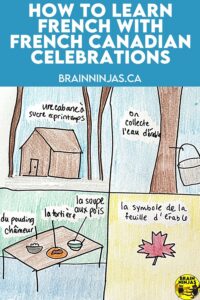
Nothing is better than sweet maple syrup. But it has to be the real thing…not sirop de poteau (syrup from a post). Yes, we are maple syrup snobs! This ‘liquid gold’ is most likely coming from a sugar shack in Québec. Early spring is awaited by every sweet tooth. From the eating of the sticky taffy (tire) to the traditional meal, families gather to celebrate the beginning of spring and sugaring season (le temps des sucres). We have more information about this celebration. Try La cabane à sucre Lessons and Activities found in our BN Shop ($CAD) or TpT Store ($USD).
Fête nationale du Québec (Saint-Jean-Baptiste)
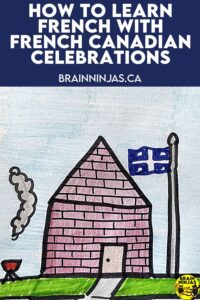
Every June 24th, people across the province of Québec celebrate the Fête nationale du Québec. This celebration was once known as the Saint-Jean-Baptiste and is still called by many la Saint-Jean. This day celebrates Québec traditions and culture. Concerts, parties, parades, family gatherings and fireworks are staples of this celebration. It is also the start of summer holidays across the province. Try our Saint-Jean-Baptiste Lessons and Activities in our BN Shop ($CAD) or TpT Store ($USD).
Fête nationale de l’Acadie
L’Acadie is the region of New Brunswick, Prince Edward Island and Nova Scotia where French settlers arrived starting in 1604. Acadians are descendants of the French. The British eventually took control of the region. Between 1755 and 1763, about 10,000 Acadians were removed. They refused to pledge to be loyal to the British crown. This forced deportation is also known as the Acadian expulsion or the Great Upheaval. Today, every August 15th, Acadians across the region celebrate Acadian culture. They commemorate this dark part of history. Many events are planned. People travel across the region to gather with family. Try La Fête nationale de l’Acadie Lessons and Activities in our BN Shop ($CAD) or TpT Store ($USD).
Le réveillon (Christmas Eve)
Le réveillon is a Christmas Eve tradition in French Canada. Students read a short French text and use cognates and near cognates to figure out new phrases. They can respond in English, French or a mix of both. Try Le réveillon in our BN Shop ($CAD) or TpT Store ($USD).
Who Do We Think We Are? Celebrations and Identity
What celebrations do you celebrate? What celebrations do you feel are a part of your identity and who you are? How are these celebrations a part of your community? French Canadian celebrations are an important part of French Canadian identity. Help students understand the role these celebrations play in Francophone identity.
Easiest Ways to Start Learning a Second Language
Reading is probably the easiest way to learn and practice another language. The second language can be understood with good strategies. It’s easier than listening, speaking and writing. Seeing the words in context gives learners the opportunity to make stronger connections.
If you can read in one language, you can read in another (kind of). Of course, this only works for languages that use the same alphabet system. Reading in Arabic when you speak English won’t help, but reading in French is easy(ish).
Tap Into French Text Types
Students can gather information from a variety of types of texts. Reading all kinds of texts builds literacy skills. It’s also more interesting!
Using a variety of texts, students gather information about the celebrations. It’s way more fun to read about the French Canadian celebrations through letters, stories, non-fiction, diary entries, text messages and posters.
French and English Cognates: Word Friends (and Near Friends)
One effective strategy for learning a second language is to use cognates. Cognates are words that are identical in two languages. They are written the same way and mean the same thing, but may sound different. Near cognates are words that are very close in the two languages. They are also very helpful.
Using this strategy, students figure out quite a bit in the second language. It is especially effective when reading because students can see the words.
Use cognates from your word wall to prepare students for reading. Share the words, play games, study the similarities and differences.
Texts written using a majority of French/English cognates make texts easier to read. Students use cognates to make sense of texts in a second language. They will be surprised by how much they can understand!
Sharing language and culture through texts that are at the right age level helps students connect with the language.
Use Context
Context is one of the best language teachers. After all, you learned your first language through context! When reading, have students use context as much as possible. When the majority of the text is written using cognates, students can figure out the words more easily. Students can learn unknown words based on context. Students can gather important information from context.
Sentence Building Like A Pro
Reading texts gives students lots of information. Sentence stems help students build sentences about the topic such as symbols, activities and traditions for each celebration. They practice writing simple, repetitive sentences. Practice makes perfect. Right?!
Take it a step further and practice oral skills by using the sentence stems about the French Canadian celebrations. This allows students to copy simple sentences.
Reading out loud is the best way to get beginning students to speak in the second language. Many students shy away from speaking without model sentences. Some will even tremble like a leaf! Use the sentence stems to increase risk-taking and success.
Want to go even further? Have students practice word skills.
8 Basic Word Skills
As anyone who teaches French as a Second Language knows, it can be challenging. French has a lot of rules and a lot of exceptions to the rules. Where do you draw the line? How much do you teach your students? What do they really need to know at this level?
One way is to teach students a general understanding of the complexities of the language and not mastery of the word skill. Let’s be honest. Teaching French for 150 minutes a week is not going to make your students masters of the French language.
Let’s Break it Down
These are the word skills in our Francophone Celebrations in Canada. Find the French Celebrations Bundle in our BN Shop ($CAD) or TpT Store ($USD).
| Word Skill | Resource |
| Nouns | Le Festival du Voyageur in our BN Shop ($CAD) or TpT Store ($USD). La Fête nationale du Québec (Saint-Jean-Baptiste) in our BN Shop ($CAD) or TpT Store ($USD). |
| Verbs | Le Carnaval de Québec in our BN Shop ($CAD) or TpT Store ($USD). La cabane à sucre in our BN Shop ($CAD) or TpT Store ($USD). La Fête nationale du Québec (Saint-Jean-Baptiste) in our BN Shop ($CAD) or TpT Store ($USD). |
| Adverbs | Le Festival du Voyageur in our BN Shop ($CAD) or TpT Store ($USD). La Fête nationale de l’Acadie in our BN Shop ($CAD) or TpT Store ($USD). |
| Adjectives | Le Carnaval de Québec in our BN Shop ($CAD) or TpT Store ($USD). Le Festival du Voyageur in our BN Shop ($CAD) or TpT Store ($USD). La cabane à sucre in our BN Shop ($CAD) or TpT Store ($USD). |
| Prepositions | La Fête nationale du Québec (Saint-Jean-Baptiste) in our BN Shop ($CAD) or TpT Store ($USD). La Fête nationale de l’Acadie in our BN Shop ($CAD) or TpT Store ($USD). |
| Pronouns | Le Carnaval de Québec in our BN Shop ($CAD) or TpT Store ($USD). |
| Determiners | La cabane à sucre in our BN Shop ($CAD) or TpT Store ($USD). |
| Conjunctions | La Fête nationale de l’Acadie in our BN Shop ($CAD) or TpT Store ($USD). |
Teaching Universal Literacy Skills
Teach general literacy skills that can be applied to any language when making meaning. This reinforces literacy skills in general.
Same, Same, Different, Different: Comparing and Contrasting
Comparing looks at the similarities between two or more concepts, ideas or categories. Contrasting looks at the differences. When students are asked to compare and contrast, they are looking at similarities and differences. Practice this skill in our La Fête nationale du Québec resource. Try our Saint-Jean-Baptiste Lessons and Activities in our BN Shop ($CAD) or TpT Store ($USD).
Stretch My Thinking: Inferring
An inference is made when the text gives some of the information and the rest is filled in with the reader’s background knowledge. It can also be figured out using the information given. Practice this skill in our Le Festival du Voyageur resource. Find Le Festival du Voyageur Lessons and Activities in our BN Shop ($CAD) or TpT Store ($USD).
Pare it Down: Summarizing
Summarizing is the skill of taking a lot of information and reducing it down to the main points. The first step is having students decide if a summary is good. Students need to learn to figure out which information is important in a summary. Practice this skill in our La cabane à sucre resource. Find La cabane à sucre Lessons and Activities in our BN Shop ($CAD) or TpT Store ($USD).
Important/Not Important: Analyzing
Sometimes we have to separate the text that is important from the text that is interesting. Important information is relevant and specific to the topic. Interesting information is connected, but it does not need to be included to get to the main idea. Practice this skill in our La Fête nationale de l’Acadie resource. Find La Fête nationale de l’Acadie Lessons and Activities in our BN Shop ($CAD) or TpT Store ($USD).
This Reminds Me Of: Connecting
Connecting means thinking about a way the text reminds you of something you’ve experienced, read, watched or learned about the world. Many students are great at making connections (those are the ones that like to tell you stories about everything as soon as you start teaching). Others don’t seem to see the relationship. Learning to connect to what we read is important for helping us understand what we’ve read more deeply. Practice this skill in our Le Carnaval de Québec resource. Try Le Carnaval de Québec Lessons and Activities which are found in our BN Shop ($CAD) or TpT Store ($USD).
Here are the literacy skills found in our Francophone Celebrations in Canada. All the sets are available in a discounted French Celebrations Bundle in our BN Shop ($CAD) or TpT Store ($USD).
| Literacy Skill | Resource |
| Compare and Contrast | La Fête nationale du Québec (Saint-Jean-Baptiste) in our BN Shop ($CAD) or TpT Store ($USD). |
| Inferring | Le Festival du Voyageur in our BN Shop ($CAD) or TpT Store ($USD). |
| Summarizing | La cabane à sucre in our BN Shop ($CAD) or TpT Store ($USD). |
| Analyzing | La Fête nationale de l’Acadie in our BN Shop ($CAD) or TpT Store ($USD). |
| Connecting | Le Carnaval de Québec in our BN Shop ($CAD) or TpT Store ($USD). |
Simple Writing Activity
Most FSL students can’t write themselves out of a paper bag. Getting students to write using sentences from the texts is helpful. After all, imitation is the best form of flattery!
Students can write a simple paragraph using some of the information found in texts. They don’t need to write a novel or even write everything correctly. They probably can’t at this level. It’s also important for students to feel like they can take risks in writing. Risk-taking is KEY to learning a second language.
A short, written text gives students the chance to briefly explain the connection between the French Canadian celebration and identity.
The celebration activities are more about gathering the information anyway!
Connect to the HeART: Art Activities in the Second Language Class
Broaden student understanding of these celebrations by completing an art project. Art, when combined with learning a language, can open doors to greater connections. Challenge students to explore the cultural significance of the French Canadian celebrations in a different way. It connects a creative task to language learning. Many students also connect best to learning visually.
Painless, Low-Risk Assessment
Using visual representations to capture the student’s learning about the celebration keeps the assessment simple. After all, the idea is to get students familiar with the celebration and how it contributes to identity.
Connected Closure
Reuse sentences from sentence-building activities and the Word Sets. Students add the word intéressant/intéressante to each sentence. They share what they think is the most interesting thing about the celebration. This connects their learning. It develops their vocabulary. It increases their understanding of the cultural significance of the French Canadian celebration.
Extend Learning
Want students to extend their learning about the celebration? Have students complete simple research on the celebration. Questions about the French Canadian celebrations allow students to stretch their understanding.
Let’s Celebrate!
Our French resources introduce students to French Canadian celebrations. They are meant to be used in Grades 5-8 French as a Second Language or Core French classes. They are not meant for lower elementary French Immersion classes.
Students use different texts to gather information about a Francophone celebration. After reading the texts, students complete activities to practice word skills or literacy skills. You can pick and choose what works for your class. We love giving you choices!
What connections can you make to celebrations that are a part of your identity? Celebrate French Canadian culture with us. All the sets are available in a discounted French Celebrations Bundle in our BN Shop ($CAD) or TpT Store ($USD).
Try This Free Activity
Need a free French activity to help your learners understand more about how the French language works? Get a free resource from our Resource Library. We can send a copy directly to your inbox when you sign up for our email list.
French Canadian Celebrations FAQ
What are the top French Canadian celebrations to teach?
We feature six celebrations. They are Le Carnaval de Québec, Le Festival du Voyageur and la cabane à sucre. The other three are la Fête nationale du Québec, la Fête nationale de l’Acadie and le réveillon.
When are the main French Canadian celebrations held?
Le Carnaval de Québec runs from late January to early February. Le Festival du Voyageur takes place in Manitoba in February. La cabane à sucre happens in early spring during sugaring season. Québec’s Fête nationale is June 24 and the Acadian celebration is August 15. Le réveillon is celebrated on Christmas Eve.
Why teach French as a Second Language through culture?
Culture gives students a reason to care about the language. Reading about real celebrations helps students connect words to meaning. It also helps students see French as part of Canada, not only a school subject.
How can beginners read French texts?
Start with cognates, which are words that look alike and mean the same in French and English. Students then use context to figure out unknown words. Texts built on cognates are easier to read, so beginners understand more than they expect.
What word skills and literacy skills do students practice?
Students practice eight word skills, from nouns to conjunctions. They also practice comparing, inferring, summarizing, analyzing and connecting. You can pick and choose what works for your class.
What French resources do you have for Canadian classrooms?
Our Francophone Celebrations in Canada resources are made for Canadian FSL and Core French classes. Find the French Celebrations Bundle in our BN Shop ($CAD) or TpT Store ($USD).
Looking for more blog posts about teaching French?
- How to Teach French as a Second Language
- How to Assess French as a Second Language
- How to Host a Carnaval de Québec in Your School
- Inspiring Ways to Celebrate the Festival du Voyageur
Let us know what you think below. If you still have questions, ask us those too.



